
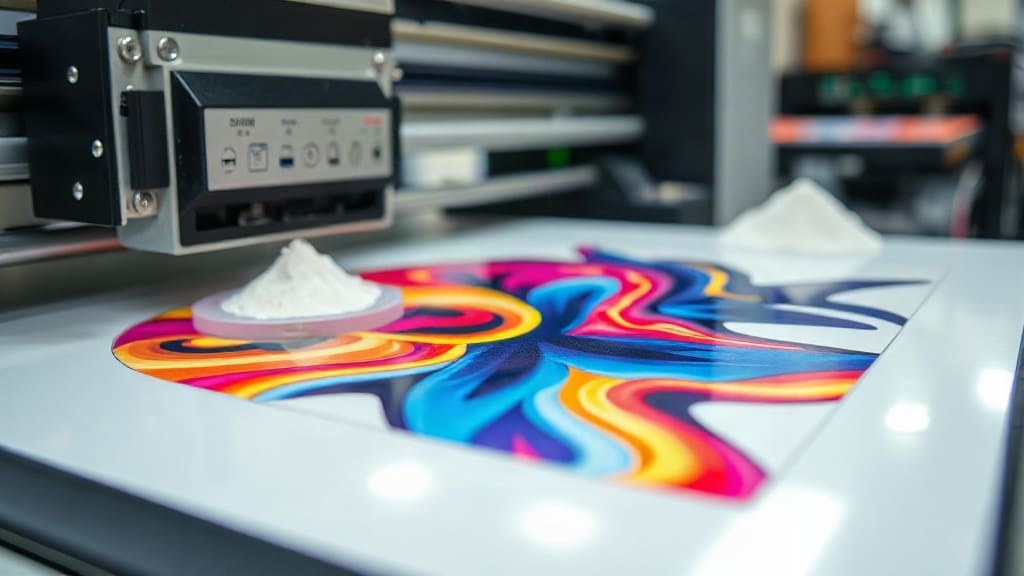
DTF printing is revolutionizing the custom apparel industry, offering a versatile and cost-effective way to produce vibrant, durable transfers. In this comprehensive guide, we'll explore what DTF is, how it works, and why it might be the perfect choice for your next printing project.
What Is DTF Printing?
Direct-to-film printing, commonly known as DTF, is a method where designs are printed onto a special film, coated with adhesive powder, and then heat-pressed onto fabric. Unlike traditional methods that print directly onto the garment, DTF creates a transfer that can be applied to various materials, including cotton, polyester, blends, and even hard surfaces like mugs and bags.
Introduced as an evolution of DTG (direct-to-garment) printing, DTF addresses many limitations of older techniques. It allows for high-detail, full-color prints without the need for pre-treatment or specific fabric types. This flexibility has made DTF a favorite among small businesses and large-scale producers alike.
How Does DTF Work?
The DTF process involves several precise steps to ensure a quality transfer:
- Design Creation: Your artwork is prepared in a graphics software, ensuring it is high-resolution and color-separated for optimal printing.
- Printing: The design is printed onto a PET film (polyethylene terephthalate) using a specialized DTF printer equipped with CMYK plus white ink. The white ink acts as an underbase for vibrant colors on dark fabrics.
- Adhesive Application: A hot-melt adhesive powder is applied to the wet ink on the film. This powder sticks only to the printed areas, creating a strong bond when melted.
- Curing: The film is passed through a dryer or heat source to melt and cure the adhesive powder, making it tacky and ready for transfer.
- Transfer: The film is placed on the garment with the design facing down, and a heat press applies pressure and heat (typically 300-320°F) for 15-20 seconds. The adhesive melts, bonding the design to the fabric.
- Peeling: After cooling slightly, the film is peeled away, leaving the design permanently embedded in the garment.
Key Benefits of DTF
Why has DTF become so popular? The advantages are numerous:
- Versatility: DTF works on almost any fabric, including difficult ones like nylon and leather, and even on non-textile surfaces.
- Soft Hand Feel: The transfers have a soft texture, unlike heavy vinyl prints, because the ink and adhesive are thin and flexible.
- Durability: DTF prints resist cracking, peeling, and fading, even after repeated washing, making them ideal for workwear and activewear.
- Vibrant Colors: The white underbase ensures colors pop on dark materials, and the CMYK inks produce a wide gamut.
- No Pre-treatment: Unlike DTG, DTF doesn't require coating the fabric beforehand, saving time and reducing costs.
- On-Demand Production: You can print only what you need, reducing inventory waste.
DTF vs. Other Printing Methods
To appreciate DTF, it's helpful to compare it with alternatives like screen printing, DTG, and vinyl.
DTF vs. Screen Printing
Screen printing is excellent for large runs of simple designs but has high setup costs and struggles with detailed, multi-colored artwork. DTF offers full-color without setup fees, making it perfect for low to medium quantities.
DTF vs. DTG
While DTG prints directly onto garments, it requires a cotton-rich fabric and pre-treatment for best results. DTF is more versatile, as it can adhere to synthetic fabrics and mixed materials, and it allows for bulk production of transfers in advance.
DTF vs. Vinyl Heat Transfer
Heat transfer vinyl (HTV) is great for single-color designs but is labor-intensive for complex graphics. DTF can reproduce gradients, shadows, and tiny details that HTV cannot achieve efficiently.
Essential Equipment and Materials
Setting up a DTF operation requires specific gear. Here's what you need:
- DTF Printer: Usually an Epson or Ricoh inkjet printer modified to handle DTF inks. Look for models like the Epson L1800 or P600.
- DTF Inks: Pigment inks that include CMYK and white. High-quality inks are crucial for color vibrancy and washfastness.
- PET Film: A special film designed to release the ink and adhesive cleanly. Choose a film with good ink absorption.
- Adhesive Powder: Hot-melt polyurethane powder that activates under heat. Particle size and melting point vary; select based on your fabric types.
- Heat Press: A clamshell or swing-away press that provides even pressure and temperature control.
- Curing Oven or Dryer: For melting the adhesive powder after printing. Some setups use a powder shaker and a convection dryer.
Tips for Perfect DTF Transfers
Getting the best results requires attention to detail. Here are practical tips from experience:
Choose the Right Film and Powder
Not all films are equal. Some have a coating that better holds ink, while others are designed for different drying times. Similarly, the adhesive powder's size matters: a finer powder works well for smooth fabrics, while a coarser one may be needed for textured materials. Always test combinations to find what works for your specific use.
Master the Printing Settings
Adjust your printer's settings for the correct ink density. The white ink should be printed with multiple passes to create a solid underbase, but too many passes can cause the ink to bleed. Use a rip software like AcroRIP to manage color profiles and ensure consistent results.
Optimize the Curing Process
Heat and time are critical. Too little heat leaves the powder under-cured, resulting in poor adhesion. Too much can cause the powder to bubble. Aim for the powder to become completely molten but not scorched. A temperature of 140-160°C (284-320°F) for 20-30 seconds is typical, but always follow your powder's instructions.
Press Like a Pro
When heat-pressing, use a Teflon sheet to protect both the garment and the film. Press with firm, even pressure. After pressing, wait a few seconds before peeling the film. For dark garments, peel cold; for light ones, you can peel hot or cold. Experiment to find the method that gives the brightest colors and best adhesion.
Washability Testing
Before mass production, do a wash test. Launder a sample at the recommended cycle to ensure the design doesn't crack or fade. This can save you from costly errors.
Common Issues and How to Fix Them
Even experienced printers face challenges. Here are some solutions:
- Ink Bleeding: This happens when the white ink spreads. Increase the distance between the print head and film, or reduce the ink density.
- Poor Adhesion: If the transfer doesn't stick, your adhesive powder may be old, or the curing temperature was too low. Re-cure or adjust your process.
- Film Sticking: Sometimes the film doesn't release cleanly. Ensure the film is appropriate for your ink, and let it cool before peeling.
- Color Dullness: If colors appear muted, check your white underbase. If it's too thin, colors may not pop. Also, calibrate your monitor and printer.
DTF in Business: Is It Profitable?
Many small businesses are embracing DTF because it lowers the barrier to entry. With a relatively modest investment, you can offer custom printing services without the overhead of large equipment. DTF transfers can be produced in bulk and applied on demand, making it an excellent model for print-on-demand services.
However, success depends on factors like quality control, customer service, and niche marketing. Offering unique products such as custom pet apparel or personalized team jerseys can set you apart. As with any business, research your market thoroughly and start small.
Frequently Asked Questions
Can I use DTF on 100% polyester?
Yes, DTF works great on polyester, which is a significant advantage over DTG printing. The adhesive powder bonds well with synthetic fibers, and the low-heat application prevents scorching. Always use a lower temperature and a shorter pressing time to avoid melting the fabric.
What is the lifespan of a DTF print?
With proper care, a DTF transfer can last as long as the garment itself, typically 50-100 washes. The key is to use quality materials and follow the correct curing and pressing procedures. Washing in cold water and air drying or tumble drying on low can extend the print's life.
How much does it cost to start DTF printing?
The initial investment varies. A basic setup with a modified printer, inks, films, and a heat press can cost around $3,000 to $5,000. However, professional systems with dedicated DTF printers and curing ovens can exceed $20,000. It's wise to start with a budget-friendly option and upgrade as your business grows.
Do I need a special printer for DTF?
While you can convert some inkjet printers, it's recommended to use a printer designed for DTF or one that is easily adaptable. Printers like the Epson SureColor P600 or the F2100 are popular choices because they support pigment inks and have robust feed systems for film.
Can I print white text and logos with DTF?
Absolutely. DTF printers have a white ink channel, allowing you to print white elements directly. For best results, ensure the white is printed as an underbase for colored graphics, or as a standalone layer for white-only designs. This capability makes DTF ideal for dark-colored garments.
Final Thoughts
Direct-to-film printing is a game-changer in the custom printing landscape. Its versatility, affordability, and high-quality output make it accessible to hobbyists and professionals alike. By understanding the process, investing in the right equipment, and mastering the techniques, you can produce transfers that impress customers and stand the test of time. Whether you're starting a side hustle or scaling your existing business, DTF is a skill worth acquiring.